Getting Started with Outdoor Watercolor Painting
Everything you need to know about setting up for plein air painting — from choosing your first materials to working with water outdoors.
A practical guide to what you actually need versus what's nice to have. We've tested gear in Gauja conditions and here's what holds up and what doesn't.
You don't need a lot to get started with plein air painting. Honestly, you can start with less than you'd think. The real challenge is figuring out which pieces will actually survive repeated use in changing weather and which ones are just nice window dressing.
We've spent years testing gear in Gauja's conditions — rain that comes sideways, wind that rattles your easel, and temperature swings that would surprise most painters. This guide covers what we've learned about building a kit that doesn't let you down.
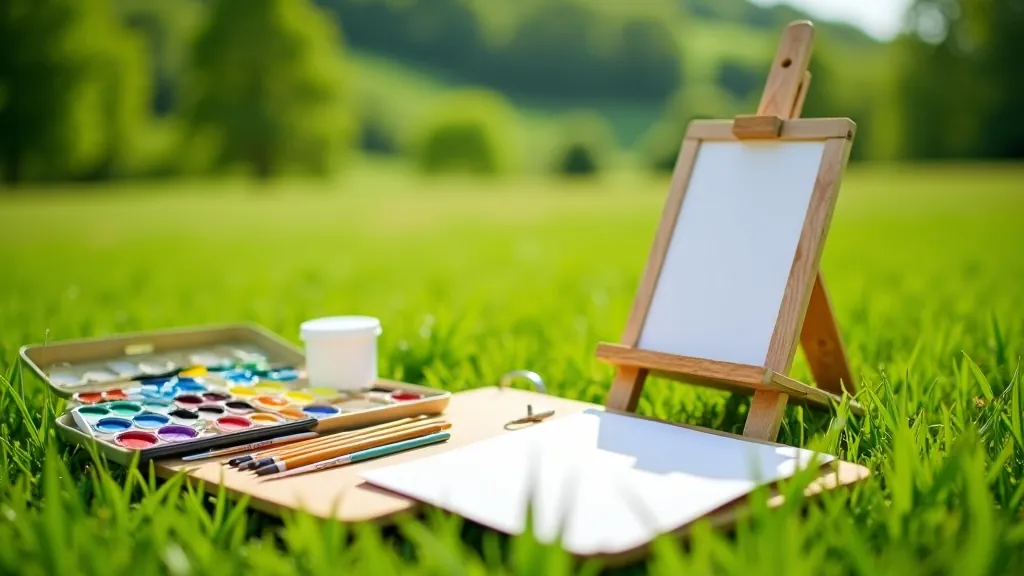
Let's start with what you genuinely can't skip. These five things form the foundation of every working kit we've built over the years.
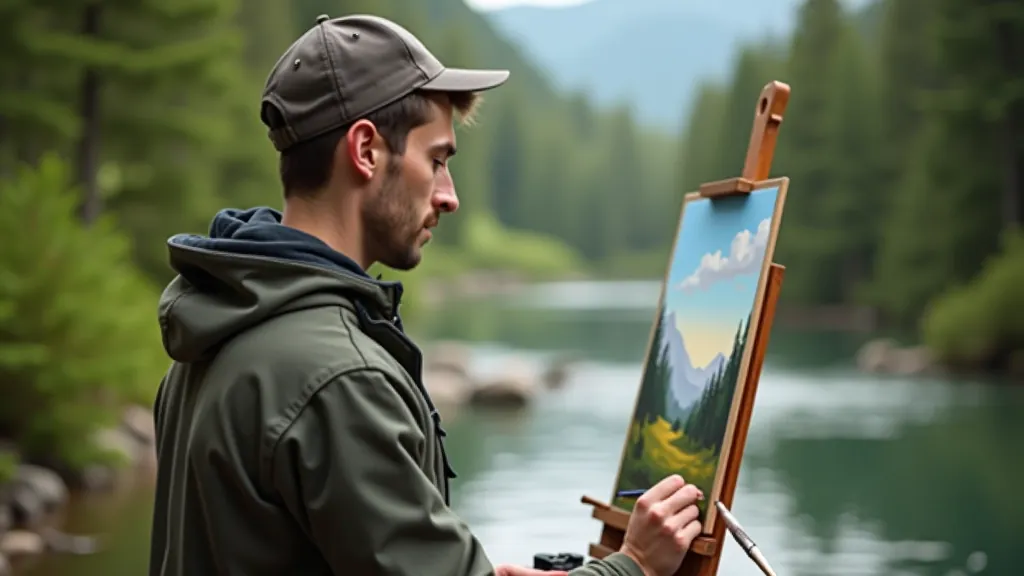
Skip the studio models. You need something that weighs under 2 kg and sets up in seconds. Field easels made from aluminum are worth the investment — they don't warp in humidity and they'll last through years of transport.
Cold-pressed watercolor paper holds up to wet conditions better than sketching paper. For oils, pre-primed canvas boards are lighter and easier to carry than stretched canvases. One good surface matters more than ten mediocre ones.
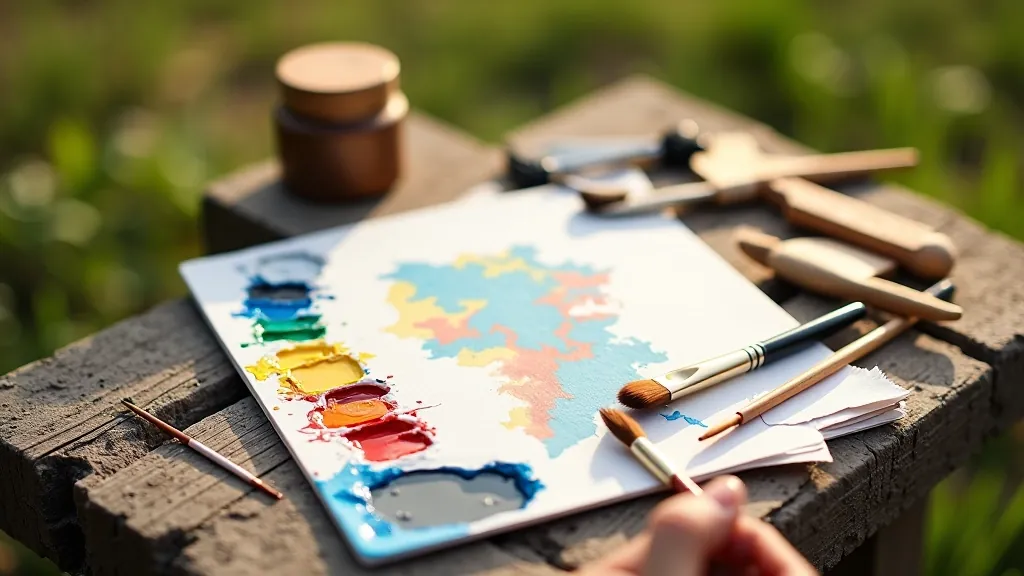
You don't need a huge selection. Seven to ten colors is enough. Student-grade works fine for practice — the difference between student and professional matters less than choosing colors that actually mix into what you need.
Synthetic brushes handle moisture better than natural hair. Get two or three decent brushes instead of a dozen cheap ones. They'll outlast cheaper alternatives and won't shed bristles into your work.
A collapsible water container for watercolors or a sealed jar for oils keeps your medium contained. Wind can catch open cups — you'll spill everything. Closed containers are non-negotiable.
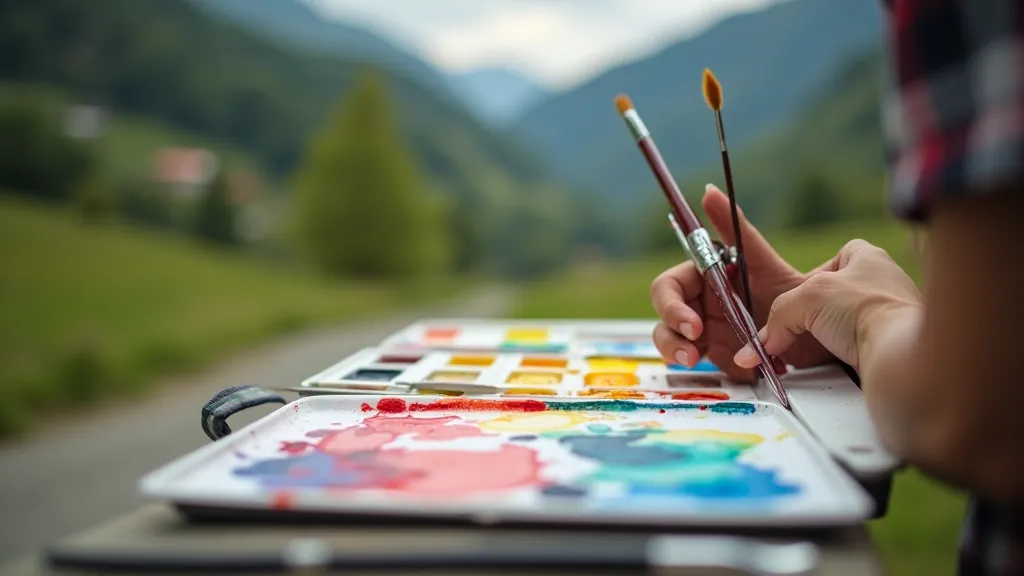
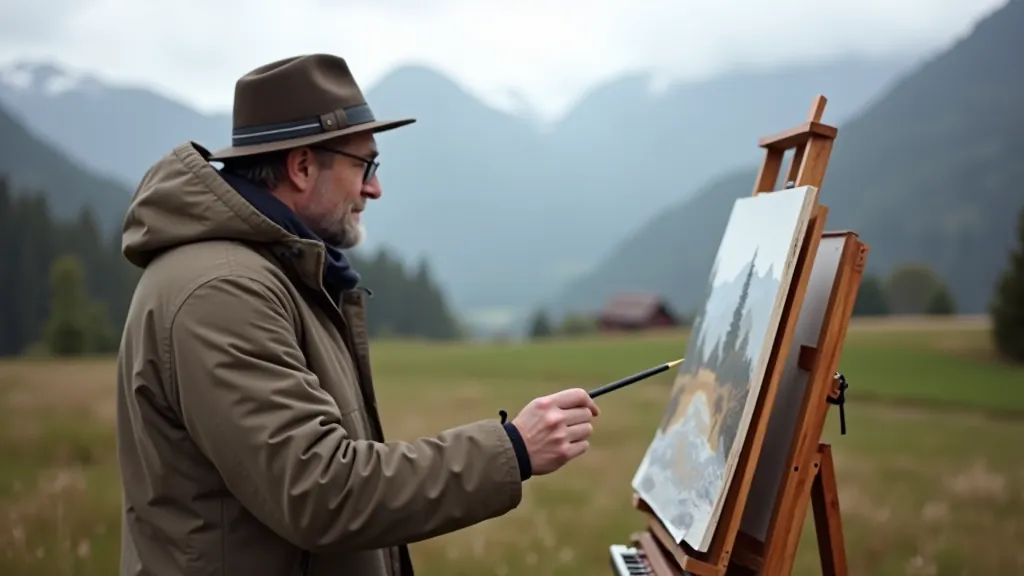
Once you've got the basics covered, certain additions genuinely improve your experience. These aren't required — but they solve real problems that come up when you're painting outside.
A good hat or umbrella changes everything when the light's low and you're squinting at your work. Protective gloves mean you're not wiping paint on your pants. A sealed bag for wet paintings keeps your gear clean. These things cost 20-50 euros each and last for years.
Some painters swear by pochade boxes — compact wooden carriers that fold into painting surfaces. Others prefer a simple backpack with compartments. The right choice depends on how far you walk and what surface you prefer.

Cheap easels tip over in wind. We've watched this happen more times than we'd like. The wobble starts small — you ignore it — then a gust catches your canvas and it's on the ground. A quality easel costs twice as much but weighs the same and actually stays upright.
Brushes from discount stores shed bristles. This isn't a minor annoyance — it ruins your work. You're cleaning bristles out of wet paint constantly. One decent brush beats three cheap ones every time.
Moisture is your enemy. Gauja's weather swings between damp mornings and dry afternoons. Metal ferrules rust. Wood handles swell. Sealed containers protect everything. An old lunch box works fine if it's airtight.
The real discovery: You'll outgrow your first kit. That's fine. Start simple. Use what you learn to build something better. The painters who've stuck with this for years all started with basically nothing.
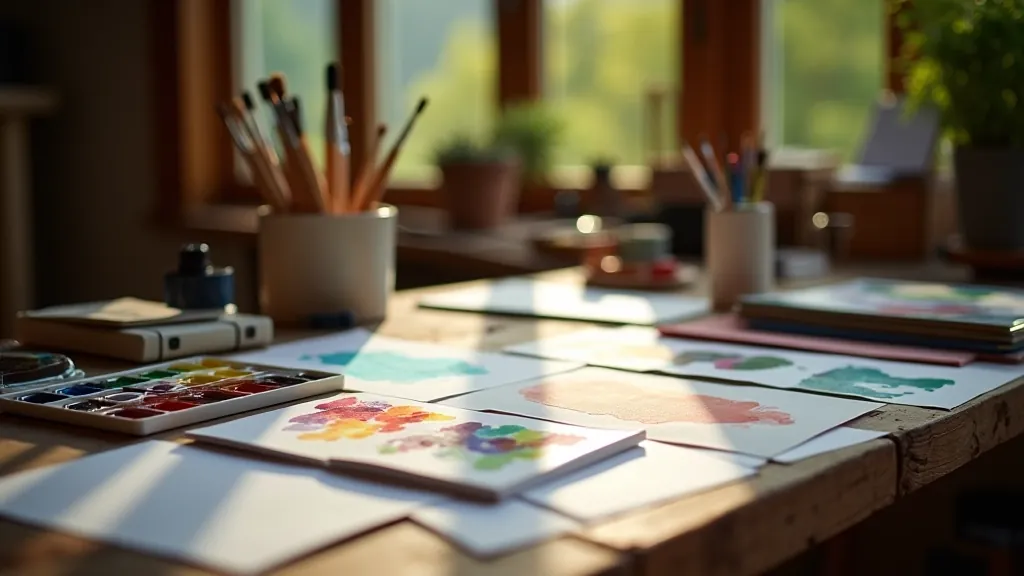
This article represents our experience and observations from years of plein air painting in Gauja Valley conditions. Equipment preferences vary based on individual technique, medium choice, and personal comfort. Test gear yourself before committing to larger purchases. Different painters find success with different setups — what works for us may not be exactly right for you.
The best kit is the one you'll actually use. Don't buy everything at once. Start with the essentials — a decent easel, good paper, basic paints, a few brushes, and water control. Use that setup for weeks. You'll figure out what's missing.
That's when you add the nice-to-haves. A hat because the sun's too bright. A better brush because you've realized what sizes you actually need. A sealed bag because your paintings keep getting dusty on the walk home.
Building a kit is iterative. It's not something you finish — it's something you refine. And honestly, that's the best part. You're always learning what works better.